

How to Judge What Makes Perfume Artisanal Quality
Last Updated: October 30, 2026
Quick Summary
Artisanal quality in perfume comes down to three things: who composes the scent, what goes into it, and how it is made. Artisanal perfumery is generally small-batch fragrance development led by an independent perfumer who controls the composition. Because "artisanal" has no legal definition, judge a brand's artisanal quality by what it can verify.
- Artisanal quality rests on who composes the scent, what goes into it, and how it is made.
- Ask who wrote the formula and how many versions it went through before release.
- Ask how long a scent rests before bottling, since maceration is often skipped by mass producers.
- Test any perfume with a controlled protocol: one scent per arm, same application amount, and a written log.
Table of Contents
- What Artisanal Perfumery Means in Practice
- What Makes a Perfume High Quality: Ingredients and Materials
- How Artisanal Perfume Is Made, Step by Step
- Artisanal Perfume vs Niche Perfume: Where the Line Falls
- Testing Artisanal Quality on Skin: Longevity, Sillage, and Maturation
- Batch Consistency, Safety, and Value for Money
- Choosing Your Next Artisanal Scent With Lady Dawson
- Frequently Asked Questions
What Artisanal Perfumery Means in Practice
Artisanal quality in perfume comes down to three things: who composes the scent, what goes into it, and how it is made. At Lady Dawson, we treat those as separate questions, because a bottle can score well on one and poorly on another. Artisanal perfumery is generally understood as small-batch fragrance development, usually led by an independent perfumer who controls the composition rather than handing it to a large fragrance house's internal team.
That independence matters more than the label. A mass-market scent is often built to test well in focus groups and to match a current trend.
Be cautious with the word itself. "Artisanal" has no legal definition in the United States, so no regulator certifies it. Deceptive-advertising rules apply to claims of craftsmanship just as they do to any other product claim, which means a brand should be able to back up what it says.
What Makes a Perfume High Quality: Ingredients and Materials
Quality starts with the raw materials. Perfume is built from aroma materials, both natural and synthetic, blended into a formula and carried in a solvent, usually perfumer's alcohol.
Two questions cut through most marketing. Does the brand name its key materials or explain where they come from? And does it describe the scent in terms of notes you can actually smell, such as bergamot, vetiver, or sandalwood, rather than vague adjectives?
Natural and Synthetic Aroma Materials
Natural materials such as essential oils, absolutes, and resins are not automatically better than synthetic ones. Many modern fragrances rely on synthetic molecules because they are more consistent from batch to batch and can produce notes that natural sources cannot.
Safety is part of this picture. Fragrance ingredients are subject to restrictions on certain allergens (the FDA). Natural origin does not guarantee a material is safe for every person, which is why a reputable brand should be willing to discuss allergen information when asked.
Rare Ingredients and Ingredient Sourcing
Rare or costly materials, such as certain woods, resins, and high-grade florals, can add depth to a composition. They also raise cost, and a brand's ingredient list alone does not show whether they were sourced responsibly. Ask about the supply chain. Sustainable and ethical sourcing claims should be specific: which material, which region, which supplier type. Vague phrases like "ethically sourced" without detail are a weak signal.
How Artisanal Perfume Is Made, Step by Step
Small-batch perfumery is slow. A typical process moves through several stages:
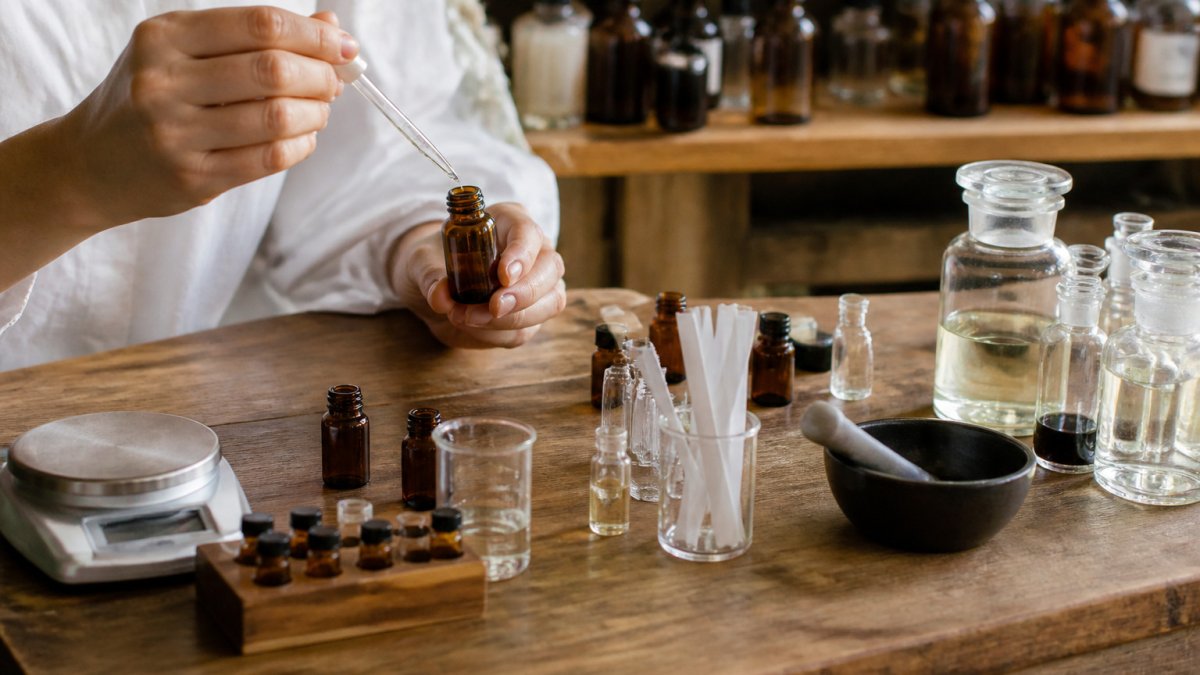
- Concept and brief. The perfumer defines the emotion or memory the scent should carry.
- Accord development. Individual accords, such as a citrus top or a woody base, are built and tested separately.
- Blending and composition. Accords are combined into a full formula, then adjusted for balance so no single note dominates.
- Maceration. The blend rests so the components can integrate, often for weeks or months.
- Dilution and filtration. The concentrate is diluted in alcohol and filtered to clarify it.
- Testing and revision. The perfumer evaluates the scent on skin over several days and returns to earlier steps where needed.
- Bottling and quality review. The final batch is checked against the approved formula before release.
Each stage is a point where shortcuts can happen. Maceration in particular is often skipped by mass producers because it adds time and cost. Ask a brand how long its scents rest before bottling. A specific answer usually indicates a real process.
The production stages below show where artisanal perfume differs from mass-market output.
| Stage | What happens | Why it matters |
|---|---|---|
| Concept and brief | Perfumer defines the emotion or memory | Sets the creative direction |
| Accord development | Individual accords are built and tested | Builds each layer separately |
| Blending and composition | Accords combined, then balanced | No single note dominates |
| Maceration | Blend rests for weeks or months | Components integrate; often skipped by mass producers |
| Dilution and filtration | Concentrate diluted in alcohol and filtered | Clarifies the final scent |
| Testing and revision | Scent evaluated on skin over several days | Returns to earlier steps where needed |
| Bottling and quality review | Final batch checked against approved formula | Confirms release standard |
Artisanal Perfume vs Niche Perfume: Where the Line Falls
These terms overlap but are not the same. Niche perfume refers to brands sold outside mainstream department-store distribution, typically with a smaller, more selective audience. Artisanal perfume describes how a scent is made, usually in small batches by an independent perfumer.
When comparing options, look at the process, not the label. A niche brand that outsources all of its formulation may be less artisanal than a small house whose founder composes every scent personally.
Testing Artisanal Quality on Skin: Longevity, Sillage, and Maturation
Most guides tell you to test on skin and wait an hour. That is not a method. What the top-ranking articles leave out is a repeatable protocol you can run on any perfume, in any order, and compare across bottles. Here is one you can use at a counter, from a sample vial, or at home.
Set up a controlled test
- One scent per arm, per day. Skin chemistry and ambient temperature shift throughout the day, so testing two fragrances on the same arm confounds the result.
- Use the same application amount. Two sprays to the inner forearm is a common baseline. More sprays exaggerate projection and can make a thin composition smell richer than it is.
- Record the conditions. Note the room temperature, your activity level, and whether you applied to moisturized or dry skin. Fragrance projects differently on hydrated skin.
Checkpoints that reveal composition quality
A well-built artisanal composition should hold its shape across the wear. Use these checkpoints:
- Opening (0-15 minutes). Top notes such as citrus, green, or light florals should be recognizable and clean, not sharp or alcoholic. A harsh opening that fades into something pleasant is a common sign of a rushed blend.
- Heart (30 minutes-2 hours). The middle should feel intentional, florals, spices, or fruits that connect the opening to the base rather than sitting as a separate layer.
- Base and dry-down (2-6 hours). Woods, resins, musks, and ambers should emerge gradually. A base that arrives abruptly or smells flat usually indicates a formula that was not given time to integrate.
- Late dry-down (6+ hours). What remains on skin is the truest test of material quality. Cheap base materials often turn sour, soapy, or metallic; well-chosen ones stay rounded.
Longevity, sillage, and the maturation question
- Longevity is how long the scent remains detectable on your skin. Most well-composed eau de parfum concentrations hold recognizable character for several hours, with base notes lingering after the top fades. If a fragrance vanishes within an hour at a normal application, that is a data point, not necessarily a defect, since concentration and your skin both matter.
- Sillage is how far the scent travels. Moderate projection that stays close to the body is generally a sign of balance. A scent that fills a room from two sprays is often overloaded with diffusive materials rather than better made.
- Maturation here means how the scent evolves over the wear, not the production rest period. A deliberate evolution, distinct phases that connect, is a stronger quality signal than a linear scent that smells identical from spray to fade, though linear compositions can be intentional and well executed.
What the test tells you about craftsmanship
Run the protocol on a fragrance you already know well, then on a new one. The comparison is the point. A composition that opens cleanly, transitions through a recognizable heart, and lands on a rounded base after six hours is showing you that the perfumer built and revised the formula rather than assembling accords and shipping. Pair the skin test with the process questions in the section above, who composed it, how many revisions, how long it rested, and you have an evidence-based read on quality instead of a marketing impression.
Batch Consistency, Safety, and Value for Money
These three topics get treated as footnotes in most guides. They are actually where artisanal claims are easiest to verify, and where the top-ranking articles leave the most room.
Batch consistency: how small producers control variation
Small-batch production drifts more easily than industrial production because natural materials vary by harvest and because each batch is weighed and blended by hand. A serious artisanal house manages that drift with a few concrete practices:
- Reference samples. The approved batch is retained and compared against each new batch, often by the same perfumer who composed it.
- Documented formulas. Every batch is weighed against a written formula, with lot numbers for each raw material so a discrepancy can be traced to a supplier or harvest.
- Maturation records. The rest period before bottling is logged, because a batch that rested three weeks will not match one that rested three months.
Ask a brand how it checks a new batch against an approved standard. A specific answer is a stronger signal than a general promise of consistency. Variation between batches is not automatically a flaw; natural materials shift. The question is whether the house notices and manages it.
Safety and regulation: what artisanal does and does not mean
Artisanal does not automatically mean natural, and natural does not automatically mean safer. Several plant-derived materials are among the most common fragrance allergens, and some essential oils are restricted in leave-on products for good reason. Two public reference points are worth knowing:
- Labeling and allergen disclosure. If you have sensitivities, ask the brand directly for allergen information rather than relying on the ingredient panel.
A reputable artisanal brand should be willing to say which materials it uses, which restrictions it follows, and how to reach someone who can answer allergen questions. Patch-test any new fragrance on a small area before wearing it widely, especially if you have known sensitivities.
Value: what you are actually paying for
Price reflects several inputs, and only some of them track quality:
- Materials. Rare florals, high-grade woods, and resins cost more per kilogram than common synthetics. A formula built around them carries a higher material cost.
- Labor and batch size. Small batches mean less automation and more hands-on time per bottle. That labor is real cost, but it is not proof of a better scent.
- Concentration. An eau de parfum carries more fragrance concentrate than an eau de toilette, which affects both cost and performance.
A practical way to judge value: compare composition complexity (does it evolve with intent?), ingredient transparency (can the brand name key materials and their sources?), batch consistency (does it manage variation?), and development time (how many revisions, how long rested?). Then decide whether the price reflects those inputs or mostly packaging and positioning. Higher cost does not guarantee higher quality, and a lower price does not rule it out.
Choosing Your Next Artisanal Scent With Lady Dawson
Start with the memory or feeling you want a scent to hold, then test it on your own skin before buying. Lady Dawson creates fragrances designed to preserve memories rather than follow trends. If you are choosing a first artisanal scent or a gift, a sample or a single bottle lets you judge the composition for yourself. Explore the collection on the Lady Dawson website to find a scent that suits your skin and your story.
Frequently Asked Questions
How can you tell if a perfume is high quality?
Start with the dry-down rather than the first spray. A well-made perfume shifts over several hours, with top, heart, and base notes that stay balanced instead of turning sharp or flat. Check whether the scent holds its character on your skin across the day and whether it smells the same from one bottle to the next. Ingredient transparency also helps: brands that name their materials and explain where they come from are easier to evaluate than those that hide behind vague descriptions. Testing on skin for at least two to three hours, ideally on different days, will tell you far more than a paper strip.
What is the difference between artisanal and niche perfume?
Niche perfume is a marketing and distribution category: smaller houses that sell outside mass retail and often focus on distinctive compositions. Artisanal perfume describes how the fragrance is made, usually in small batches, with hands-on involvement from the perfumer and an emphasis on carefully sourced materials and time-intensive blending. A niche house can produce artisanal work, and an artisanal maker can sell through niche channels, but the two terms do not always overlap. When shopping, look at how the perfume is produced and who composes it, not only at the shelf where it is sold.
Does artisanal perfume use natural ingredients?
Not always, and natural is not automatically better. Artisanal perfumers often combine natural essential oils, absolutes, and resins with well-made synthetic aroma materials, because some scents are unstable, scarce, or impractical to extract from plants. The more useful question is whether the materials are sourced with care, tested for quality, and used in a balanced composition. Ask the brand which materials are natural and which are synthetic, and why each was chosen. Clear answers are a good sign; vague claims about purity are not.
Is expensive perfume worth the money?
Price reflects several factors: the cost and rarity of raw materials, the number of hours spent composing and testing, batch size, and the brand's overhead. Small-batch production usually costs more per bottle than mass manufacturing. Whether that premium is worth it depends on how much you value the craftsmanship, the individuality of the scent, and the story behind it. Pricing varies with quantity, size, and delivery, so check Lady Dawson's website for current prices and details before deciding.
