

How to Find Your Signature Scent: A Complete Guide
Table of Contents
- Understanding Fragrance Families to Find Your Signature Scent
- Identify Your Personal Preference and Desired Impression
- How to Test Perfume on Skin Properly
- Using Perfume Samples Before Committing to a Full Bottle
- Allow Time for Your Fragrance to Develop and Dry Down
- How Long Does Perfume Last on Skin and What Affects It
- Building Your Fragrance Wardrobe: Season, Setting, and Occasion
- Frequently Asked Questions
Last Updated: October 14, 2026
Understanding Fragrance Families to Find Your Signature Scent
To find your signature scent, start with understanding fragrance families, groups organized by dominant characteristics and ingredients that help you recognize patterns in what you enjoy.
Citrus and Fresh Fragrances
Citrus fragrances open bright and energetic, featuring lemon, lime, bergamot, and mandarin, crisp and uplifting for everyday wear and warmer months. Fresh fragrances share those qualities but add aquatic or herbal notes, feeling clean and invigorating.
Citrus and fresh scents fade faster on skin than heavier fragrances. If longevity matters, pair them with a stronger base note or layer with an unscented moisturizer.
Floral and Fruity Fragrances
Floral fragrances center on rose, jasmine, peony, and lilac, ranging from delicate and romantic to bold and sensual.
Fruity fragrances add sweetness with apple, peach, berries, or plum, often paired with florals for warm, inviting profiles.
Lady Dawson's Superbloom exemplifies a refined floral: rose, orange flower, and honeysuckle up top, with jasmine and lily unfolding in the heart. Florals often feel more personal and memorable than generic options.

Woody and Spicy Fragrances
Woody fragrances build around sandalwood, cedarwood, vetiver, and oud, feeling grounding, sophisticated, warm, and deep.
Spicy fragrances introduce cinnamon, pepper, clove, and cardamom, bold and sensual, suited to evening wear and cooler seasons.
Woody and spicy fragrances last longer than citrus options and develop complexity as they wear, ideal if you want a scent that evolves throughout the day.
Identify Your Personal Preference and Desired Impression
Your signature scent should reflect who you are or want to feel like. Turn "what impression do I want to make?" into a scorable checklist you can hold against any fragrance you test.
Build a Preference Profile in Four Dimensions
Most people can narrow their taste using four dimensions, rated 1-5 (1 is "not me at all," 5 is "exactly me").
- Temperature: Do you want to feel cool and crisp (1) or warm and enveloping (5)?
- Sweetness: Dry and bitter (1) or sweet and edible (5)?
- Familiarity: Clean and recognizable (1) or unusual and complex (5)?
- Presence: Skin-close and quiet (1) or room-filling and bold (5)?
Write your four numbers down, that profile is your filter. A 2-2-4-1 (cool, dry, unusual, quiet) is a very different purchase than a 5-4-2-5 (warm, sweet, familiar, bold). When testing, ask "does this match my profile?" instead of "do I like this?"
Translate Impressions into Notes
Map your profile to the families above: warm and sweet leans woody, amber, or gourmand; cool and dry leans citrus, green, or aromatic; unusual and complex leans chypre, leather, or incense; familiar and clean leans fresh, aquatic, or light floral.
Memory helps: think about moments you felt most like yourself, a kitchen, a garden after rain, a cedar closet. Those associations point toward true preferences more reliably than any quiz.
Use a Scoring Worksheet
For each fragrance you test, score it against your profile on the same 1-5 scale, then add two practical scores:
| Criterion | What to Ask | Score (1-5) |
|---|---|---|
| Profile match | Does it fit my four dimensions? | |
| Opening | Do I like the first 15 minutes? | |
| Dry down | Do I like it after 30-60 minutes? | |
| Longevity | Is it still present at hour four? | |
| Context | Can I wear it to work and on weekends? |
A fragrance scoring 4+ on profile match and dry down, and at least 3 on longevity and context, is a shortlist candidate. Anything that only wins on the opening is a passing like, not a signature.
Separate "Who I Am" from "Who I Want to Be"
Some want a scent matching their personality; others want to express a different side. For a second-skin signature, weight profile match heavily. For a costume you enjoy wearing, weight opening and presence more. Decide before testing and your shortlist will be shorter and truer.
How to Test Perfume on Skin Properly
Skin chemistry affects how a scent develops, so what smells beautiful on a blotter strip may differ on your skin. The goal is a repeatable protocol, not a one-off sniff.
The Blotter Strip Method
Blotter strips offer a neutral testing ground, revealing top notes and overall character without skin chemistry interference.
The blotter method works best for quickly comparing fragrances when narrowing options, but it doesn't show how one performs on your body.
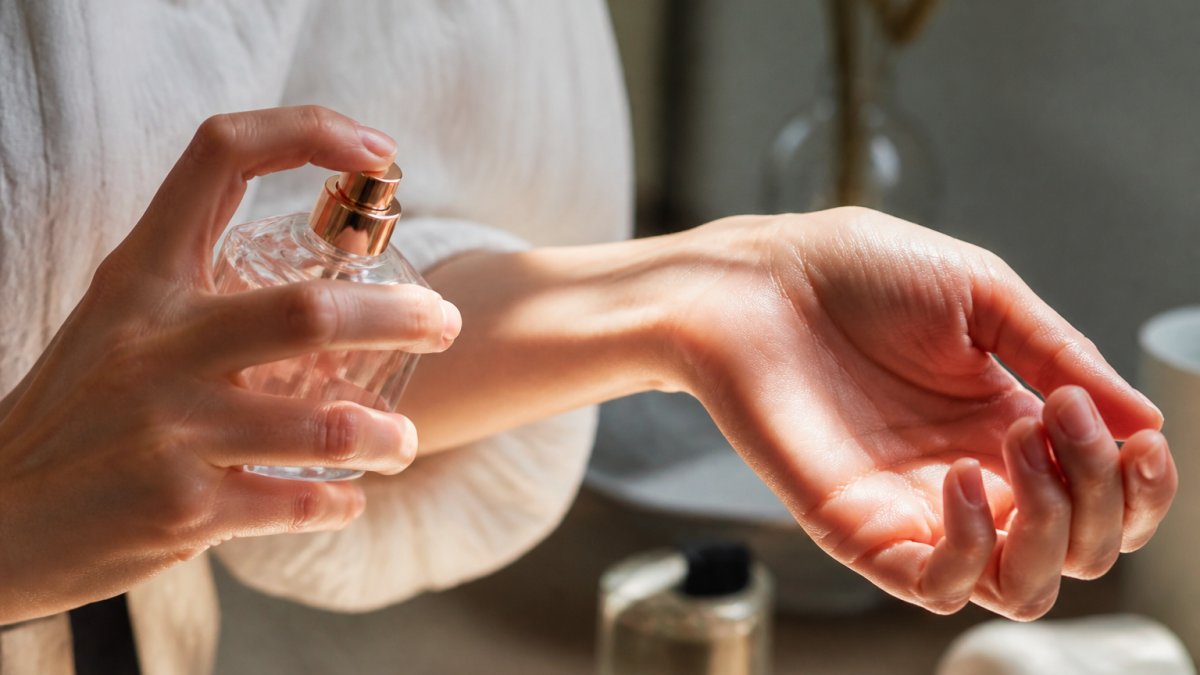
A Repeatable Skin-Testing Protocol
People who find a signature quickly often follow a structured two-week test:
- Week 1, Screening: Test no more than two fragrances per day, one on each forearm. Apply one spray per arm. Evaluate at 15 minutes, 1 hour, 4 hours, and 8 hours. Record each on your worksheet.
- Week 2, Shortlist: Take the top three from week one. Wear each for two full days in real conditions, one workday, one weekend. Do not test anything else on those days.
Apply to pulse points, wrists, inner elbows, behind ears, base of throat, which generate warmth that helps fragrance develop.
Wait at least 15 minutes before judging a scent, most reach their true character after 10-20 minutes, with the dry down settling between 30 and 60 minutes.
Test one fragrance per session when possible; multiple scents on the same skin confuse your nose. If comparing two, use opposite arms and smell coffee beans between sniffs to reset.
Why Skin Chemistry Changes a Scent
Skin chemistry is sebum, sweat, and surface pH interacting with fragrance molecules. Oily skin holds fragrance longer because oils slow evaporation; dry skin releases it faster.
This is why the same fragrance smells different on two people, and why a scent can smell beautiful in the bottle but turn sour on your skin, the strongest argument for testing on skin rather than buying from a description.
Sensitivity, Allergies, and When to Stop
Fragrance is a common cause of skin irritation, and some people are sensitive to specific materials (the American Academy of Dermatology). Before a full wear, patch test: apply one spray inside your elbow and wait 24 hours. If redness, itching, or a rash appears, stop and don't wear that fragrance.
If a fragrance irritates your skin or makes you sneeze, headache, or feel short of breath, remove it with soap and water and stop wearing it.
Using Perfume Samples Before Committing to a Full Bottle
Samples are your best tool for finding your signature scent, far cheaper than full bottles and letting you test in real conditions over several days.
Request samples before buying full sizes. Most fragrance houses offer them, some for a small fee, and the investment prevents expensive mistakes.
Wear samples in different settings, a work day, a weekend, and note first impression, development, longevity, and whether you'd wear it again.
Don't rush: give each fragrance at least three wears before deciding.
Allow Time for Your Fragrance to Develop and Dry Down
Fragrance unfolds in three phases, top, heart, and base notes, and understanding this progression helps you appreciate the full profile.
Top notes appear immediately, bright and volatile, lasting 5-15 minutes, often citrus and fruity. Heart notes emerge as top notes fade, forming the core character and lasting 30 minutes to several hours; floral and spicy notes typically appear here.
The dry down is when the fragrance settles fully on your skin, often the most beautiful phase, when it becomes truly yours.
How Long Does Perfume Last on Skin and What Affects It
Fragrance longevity depends on several factors. Understanding these helps you choose scents that fit your lifestyle.
Skin Chemistry and Longevity
Your skin's pH and oil production affect performance: oily skin holds fragrance longer, dry skin releases it faster. Moisture matters too, well-hydrated skin holds fragrance better, so apply to moisturized skin right after showering.
Body temperature affects development: warmer skin accelerates the scent's evolution, cooler skin slows it. That's why pulse points work best for application.
Some people's skin chemistry simply doesn't work with certain fragrances, a scent may smell beautiful in the bottle but turn sour on your skin. Another reason sampling matters.
Concentration Levels and Performance
Fragrance concentration determines both scent intensity and longevity. Higher concentration means stronger performance and longer wear.
Eau de Cologne contains 2-4% fragrance oils, light and refreshing, lasting 2-3 hours. Eau de Toilette contains 4-8%, moderate in strength, lasting 4-6 hours. Eau de Parfum contains 15-20%, strong and long-lasting, 6-8 hours or longer.
Higher concentration doesn't always mean better. It depends on the fragrance and your preferences. Some people prefer the subtlety of eau de toilette. Others want the staying power of eau de parfum.
| Concentration Type | Fragrance Oil % | Typical Duration | Best For |
|---|---|---|---|
| Eau de Cologne | 2-4% | 2-3 hours | Light, refreshing wear |
| Eau de Toilette | 4-8% | 4-6 hours | Daily wear |
| Eau de Parfum | 15-20% | 6-8+ hours | All-day wear |
| Parfum | 20-30% | 8-12+ hours | Evening and special occasions |
Building Your Fragrance Wardrobe: Season, Setting, and Occasion
Your signature scent doesn't have to be singular. Many people build a small wardrobe, since different scents work for different contexts.
Lady Dawson's Jubilee works beautifully as a versatile signature scent: a fresh, energizing citrus opening with a warm base of patchouli, vanilla, and amber that stays wearable year-round and transitions from day to evening with ease.

Start with one signature scent that resonates deeply, wear it consistently, and let it become part of how people know you.
Finding your signature scent is a journey of self-discovery. It requires patience, honest self-reflection, and willingness to test before committing.
Frequently Asked Questions
How do you test a fragrance before buying it to make sure it matches your signature scent?
Test fragrances on your skin rather than on paper strips alone, since your skin chemistry affects how a scent develops. Apply a small amount to your inner wrist or behind your ear, then wait at least 15 minutes for the top notes to fade and the heart notes to emerge. Wear the fragrance throughout the day to experience the full dry down. Many fragrance houses, including Lady Dawson, offer sample sizes like the Superbloom 10ml, allowing you to test a scent for several days before committing to a full 50ml bottle.
How long should you wear a perfume before deciding if you like it?
Give a fragrance at least 3-5 days of regular wear before making a final decision. Your first impression may not capture the full experience, especially as you become accustomed to the scent and your skin chemistry influences how it wears. The initial top notes (citrus, bergamot) fade within 5-15 minutes, revealing the heart notes (floral, fruity elements) over the next 30-60 minutes, and finally the base notes (woody, musk, amber) emerge and linger. Testing over multiple days helps you understand the fragrance's complete development and whether it aligns with your personal style.
What makes an artisanal fragrance like Lady Dawson worth the investment compared to mass-market options?
Artisanal fragrances prioritize quality ingredients, storytelling, and craftsmanship over mass production. Lady Dawson sources and tests fine essential oils and fragrance materials from around the globe, creating compositions designed to capture emotions and preserve memories rather than follow trends. Each fragrance is formulated with higher concentrations of premium materials, resulting in better longevity, sillage, and a more refined scent profile. While artisanal fragrances carry a higher price point than department store options, the investment reflects superior ingredients, ethical sourcing, and a fragrance experience that transcends generic perfumery.
Can fragrance sensitivity or skin allergies affect your signature scent choice?
Yes, skin sensitivity, allergies, and individual skin chemistry significantly impact fragrance selection and how a scent performs on your body. Some people react to certain fragrance materials, synthetic musks, or alcohol content. If you have sensitive skin, test fragrances on a small area first and allow time to observe any irritation. Consider starting with sample sizes to assess compatibility before purchasing a full bottle. If traditional fragrances cause reactions, explore fragrance-free alternatives or consult with a fragrance specialist about formulations designed for sensitive skin. Lady Dawson's artisanal approach includes careful ingredient selection, making samples an ideal way to determine personal compatibility.