

How Perfume Reacts to Skin Chemistry: A Testing Guide
Last Updated: October 23, 2026
Quick Summary
How perfume reacts to skin chemistry determines whether a fragrance smells like the bottle or transforms into something entirely different on your body. Your skin's pH level, natural oils, microbiome, and body temperature all influence fragrance development, projection, and longevity throughout the day.
- Acidic skin amplifies warm, spicy, and woody notes while alkaline skin enhances fresh, citrus, and floral notes.
- Apply fragrance to pulse points like inner wrists, inner elbows, behind ears, and the base of your throat where body heat activates the scent.
- Most fragrances need 15-30 minutes to fully dry down before you can judge their true character and performance.
- Oily skin holds fragrance 8+ hours while dry skin typically only holds it 4-6 hours.
- Diet, hormones, and stress affect your skin chemistry and can make the same perfume smell different from week to week.
Table of Contents
- Understanding How Perfume Reacts to Skin Chemistry
- How to Test Perfume on Skin: A Repeatable Protocol
- How Long to Let Perfume Dry Down Before Judging
- Does Skin Type Affect Perfume Longevity and Performance
- How to Make Perfume Last Longer on Your Skin
- Troubleshooting: When Perfume Smells Different Than Expected
- Frequently Asked Questions
Understanding How Perfume Reacts to Skin Chemistry
How perfume reacts to skin chemistry determines whether a fragrance smells like the bottle or transforms into something entirely different on your body. Your skin isn't a neutral canvas, it's an active participant in how a scent develops, projects, and lasts throughout the day.
The same perfume can smell fresh and bright on one person and warm and spicy on another. This variation isn't random. It comes down to specific chemical and biological factors that you can test, understand, and even optimize.
The Role of Skin pH and Acidity
Your skin's pH level directly influences how fragrance molecules interact with your skin. Skin pH ranges from acidic to alkaline, and this balance affects whether fragrance notes brighten or deepen on you.
Acidic skin (lower pH) tends to amplify warm, spicy, and woody notes. Alkaline skin (higher pH) often enhances fresh, citrus, and floral notes.
What this means for testing: If a fragrance smells too heavy when you try it, your skin may be more acidic. If it feels too light or fades quickly, your skin may lean more alkaline.
Skin Oils, Microbiome, and Scent Longevity
Skin produces natural oils that hold fragrance molecules close to your body. More oil means longer wear time and stronger projection. Less oil means the scent fades faster but may smell cleaner and fresher.
Your skin microbiome, the billions of bacteria living on your skin, also plays a role. These microorganisms interact with fragrance ingredients, sometimes creating subtle variations in how a scent smells.
The practical takeaway: If you have oily skin, you can wear lighter fragrances because they'll last longer on you.
Body Temperature and Fragrance Evaporation
Fragrance molecules evaporate faster on warm skin. Your body temperature influences how quickly scent projects and how it develops over time.
People with naturally higher body temperatures experience faster fragrance evaporation and stronger initial projection. People with lower body temperatures may need to apply more perfume to achieve the same effect.
Application insight: If a fragrance feels weak on you, try applying to pulse points and allowing the warmth to activate the scent. Don't rub your wrists together, this breaks fragrance molecules and shortens wear time.
How to Test Perfume on Skin: A Repeatable Protocol
Testing perfume properly requires a consistent method so you can compare results and understand how your skin chemistry affects different fragrances.
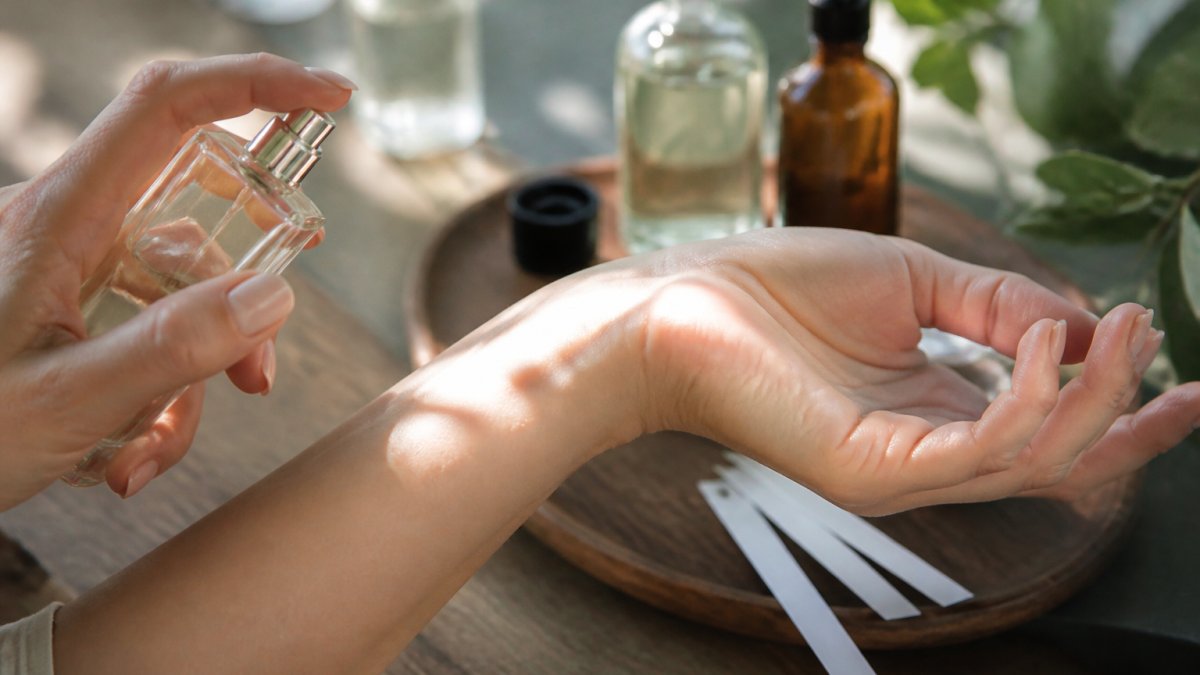
Preparing Your Skin for Accurate Testing
Start with clean, moisturized skin. Fragrance performs differently on dry versus hydrated skin, so consistency matters.
Wash your testing area with unscented soap and pat dry. Wait 10 minutes before applying perfume. This gives your skin time to return to its natural pH and microbiome state.
Don't test multiple fragrances at once. Each one interferes with the others. Test one fragrance per day, or wait at least 4 hours between tests on different areas of your body.
Application Sites and Measurement
Apply one spray to your inner wrist. Don't rub it in. Let it sit for 15 seconds, then bring your wrist to your nose and note the initial scent.
Record what you smell: the top notes, the intensity, and whether the fragrance feels true to the bottle or transformed by your skin. Note the time.
Check the scent every 30 minutes for the first 2 hours, then at the 4-hour and 8-hour marks. This reveals how the fragrance develops and how long it lasts on your specific skin chemistry.
Write down:
- Initial scent intensity (1-10 scale)
- How the scent changes at each checkpoint
- When you stop smelling it on your skin
- How strong it smells to others standing nearby (projection)
How Long to Let Perfume Dry Down Before Judging
The dry down is when fragrance stops changing and settles into its final character. Judging a perfume too early gives you a false impression.
Most fragrances need 15-30 minutes to fully dry down. Top notes fade, middle notes emerge, and the base notes anchor the scent. Don't decide whether you like a fragrance in the first 5 minutes. Wait at least 30 minutes before making a judgment call.
Understanding Fragrance Notes and Development Phases
Fragrance notes develop in three phases: top notes, middle notes, and base notes.
Top notes are the first thing you smell. They're bright, sharp, and fade within 5-15 minutes. Citrus, fresh herbs, and light florals are common top notes.
Middle notes emerge as top notes fade. They're the heart of the fragrance and typically last 3-5 hours.
Base notes anchor the fragrance and last the longest, often 6+ hours. Woods, musks, and resins form the base.
Understanding this progression helps you understand why a perfume smells different at hour one versus hour four.
Does Skin Type Affect Perfume Longevity and Performance
Your skin type dramatically affects how long perfume lasts and how strong it projects. Testing on your actual skin type, not on blotter paper or someone else's skin, gives you the real answer.
Dry Skin, Oily Skin, and Scent Projection
Dry skin doesn't hold fragrance molecules as effectively. Perfume fades faster on dry skin, sometimes within 4-6 hours.
If you have dry skin, apply fragrance to moisturized areas like the inner wrists and behind the ears.
Oily skin holds fragrance molecules longer. Perfume often lasts 8+ hours on oily skin. The projection is stronger because oil traps fragrance molecules close to your body.
If you have oily skin, lighter fragrances work well because they'll last longer on you. You don't need as much product to achieve good longevity and projection.
Moisturized Skin and Fragrance Absorption
Hydrated skin absorbs fragrance differently than dry skin. Moisturizer creates a barrier that can either enhance or diminish fragrance performance, depending on the moisturizer type.
Fragrance-free moisturizers work best. They hydrate your skin without competing with the perfume. Apply moisturizer first, wait 5 minutes for it to set, then apply fragrance. This gives you the benefits of hydrated skin plus good fragrance longevity.
Some moisturizers contain fragrance or essential oils that clash with perfume. Test your fragrance on moisturized skin to see how it performs in your actual daily routine, not in an ideal lab condition.
How to Make Perfume Last Longer on Your Skin
If your perfume fades too quickly, the issue often isn't the fragrance itself. It's how you're applying it or preparing your skin.
Layering and Application Timing
Layering fragrance with matching body lotion or oil extends wear time significantly. The base layer holds fragrance molecules longer than skin alone.
Apply unscented moisturizer first. Once it's absorbed, apply a fragrance-matched body oil or lotion. Then apply your perfume to pulse points.
Timing matters too. Apply fragrance as the last step in your morning routine, after skincare and before getting dressed.
Apply to pulse points where your body runs warmest: inner wrists, inner elbows, behind ears, base of throat, and the inside of your elbows.
Skincare, Sunscreen, and Fragrance Interactions
Heavy skincare products can interfere with how fragrance performs. Some ingredients create a barrier that prevents fragrance molecules from interacting properly with your skin.
Sunscreen is a common culprit. Apply sunscreen first, let it set for 5 minutes, then apply fragrance.
Serums and oils can enhance fragrance longevity if they're unscented. Scented skincare products compete with your perfume. Stick to fragrance-free or lightly scented options in your skincare routine.
Test your fragrance application routine on a day when you're using your normal skincare and sunscreen.
Troubleshooting: When Perfume Smells Different Than Expected
Sometimes a fragrance smells completely different on your skin than it did in the store. This isn't a defect. It's your skin chemistry at work.
Common Confounders: Diet, Hormones, and Individual Variation
Diet affects your skin chemistry and how fragrance performs. Certain foods change your skin's pH and microbiome.
If a fragrance smells different than it did last week, consider what you've been eating. Your skin chemistry shifts based on your diet, hydration level, and overall health.
Hormones also influence fragrance performance. Many people notice their perfume smells different during different times of their menstrual cycle.
Individual variation is real. This is why finding your signature scent is personal, what works beautifully on your best friend might feel off on you.
Sensitivity and Safe Testing Practices
Some people experience skin sensitivity or irritation from fragrance.
If you have sensitive skin, apply fragrance to clothing instead of skin. This gives you the scent experience without direct skin contact.
Certain fragrance ingredients cause more sensitivity than others. If you react to one perfume, you might tolerate another just fine.
Stop testing immediately if you experience redness, itching, burning, or any other irritation. Wash the area with cool water and unscented soap.
Understanding how perfume reacts to skin chemistry transforms how you shop for fragrance.
At Lady Dawson, we believe fragrance should feel personal.
Frequently Asked Questions
How do I know if a perfume matches my body chemistry?
Test the fragrance on clean, unscented skin at an inner pulse point (wrist or neck) and wait 15 minutes for the dry down phase to complete. The top notes will fade, revealing the middle and base notes that interact with your skin's oils, pH, and microbiome. If the scent profile remains pleasant and stable through the dry down, it matches your skin chemistry. Repeat the test over 2-3 days to confirm consistency before committing to a full bottle.
Why does the same perfume smell different on different people?
Skin chemistry varies by pH level, oil production, skin type, body temperature, and microbiome composition. Acidic or alkaline skin alters how fragrance molecules bond to the skin surface and evaporate. Oily skin holds fragrance longer and projects it further, while dry skin absorbs it quickly with less sillage. Body temperature affects volatility, and skin bacteria interact with fragrance compounds to create unique scent profiles. These factors combine to produce different wear times and scent development on each person.
How long should I wait before judging a perfume on my skin?
Allow 15-20 minutes for the dry down phase. The top notes (citrus, fresh, or spicy notes) fade within the first 5-10 minutes. The middle notes emerge next and develop for another 10-15 minutes. The base notes anchor the fragrance and reveal how your skin chemistry truly interacts with the scent. Judging too early means you're only experiencing the volatile top notes, not the fragrance's true character on your skin.
Can I make my perfume last longer if I have dry skin?
Yes. Apply perfume to moisturized skin immediately after showering, before applying other products. Use an unscented body lotion or hydrating oil on pulse points first, then spray or dab the fragrance. Dry skin absorbs fragrance quickly, so layering with moisturizer slows evaporation and extends longevity. Avoid alcohol-based skincare on fragrance application sites, and reapply to pulse points mid-day if needed. Fragrance concentration also matters: eau de parfum formulas last longer than eau de toilette on all skin types, including dry skin.
