

Can Perfume Evoke a Specific Memory? Science and Practice
Table of Contents
- The Science Behind Scent and Memory
- How Smell Triggers Memories: The Emotional Gateway
- Odor-Evoked Autobiographical Memory: Why Scent Recalls Personal Moments
- Can Perfume Evoke a Specific Memory? Practical Limitations and Reality
- Choosing a Perfume for a Personal Memory: A Step-by-Step Approach
- Using Fragrance as a Memory Cue: Practical Considerations
- Conclusion: Perfume as a Bridge to Your Past
- Frequently Asked Questions
Last Updated: October 16, 2026
The Science Behind Scent and Memory
Smell and memory share one of our most powerful sensory connections. Unlike sight or sound, scent bypasses the thalamus and goes straight to the limbic system, where emotions and memories are processed (Olfactory memory networks: from emotional learning to social behaviors).
This direct pathway explains why a single whiff can transport you back decades: scent reaches the amygdala and hippocampus, the regions for emotional response and memory formation, more strongly than any other sense.
How the Olfactory System Connects to Memory Centers
Your nose contains millions of olfactory receptors that send signals straight to the limbic system, skipping the thalamus that most other senses pass through first.
The limbic system includes:
- The amygdala (processes emotion)
- The hippocampus (stores memories)
- The olfactory bulb (processes scent)
This direct connection is why fragrance feels so personal: a perfume doesn't just register as a smell, it triggers memory and emotion at once, the foundation for how scent can evoke a specific memory with such force.
The Proust Effect: Involuntary Memory Through Fragrance
The Proust effect describes involuntary autobiographical memory triggered by scent, named for Marcel Proust's madeleine cake scene (Proust and involuntary retrieval). It isn't poetic, it's how the brain works.
Involuntary memory through fragrance happens automatically: a smell hits and you're back in a vivid moment from years ago, emotion included.
This differs from voluntary recall, where you actively try to remember. With scent, the memory finds you, the fragrance unlocks the past, bypassing conscious effort.
How Smell Triggers Memories: The Emotional Gateway
Emotion is the bridge between scent and memory. A fragrance doesn't trigger a neutral memory, it brings the feeling back too, so you suddenly feel the warmth, nostalgia, or joy of that moment.
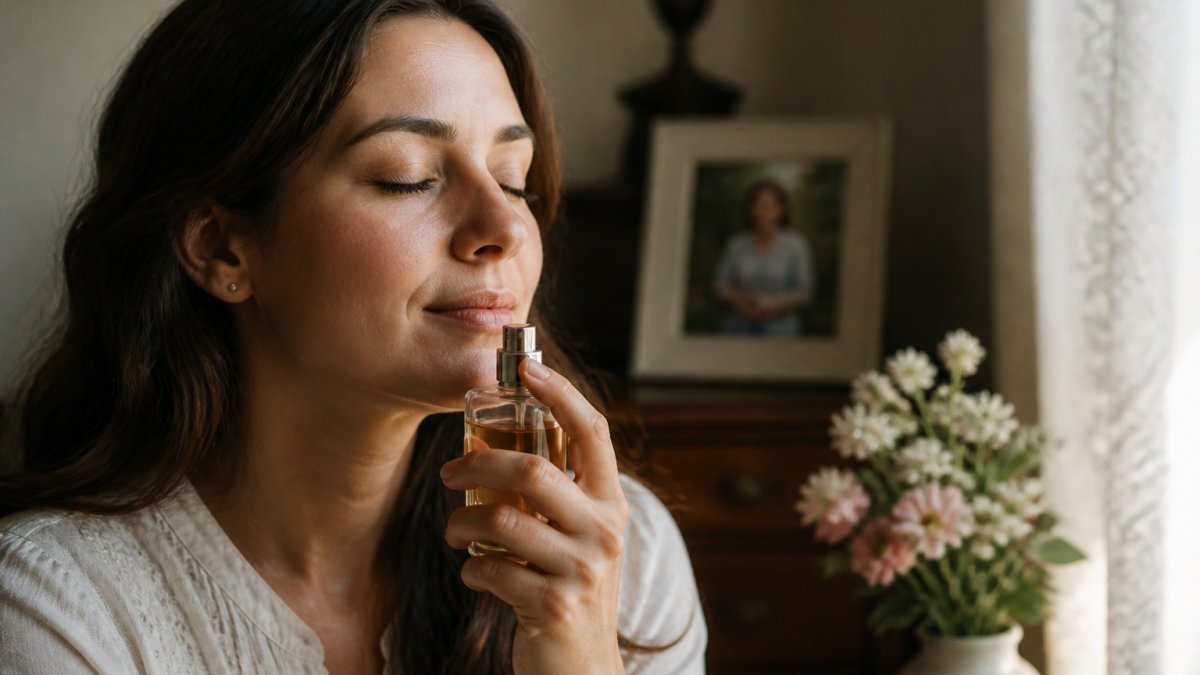
The emotional component makes scent-linked memories stick.
This is why certain fragrances feel tied to specific people or places, a grandmother's perfume, a partner's cologne, rain after a summer storm. These scents don't just remind you, they transport you.
The intensity of emotion at the time determines how strong the link becomes: a perfume worn during a significant moment creates a far more powerful association than one worn on an ordinary day.
Odor-Evoked Autobiographical Memory: Why Scent Recalls Personal Moments
Odor-evoked autobiographical memory is the technical term for remembering your own life through smell. It's personal and specific: no two people have the same olfactory memories because no two lives are alike.
When you smell a fragrance, your brain searches for connections to your personal history. If a scent matches something from your past, the memory surfaces. The specificity depends on how distinctive the smell was and how emotionally significant the moment was.
Emotion's Role in Scent-Linked Recall
Emotional memories are stronger than neutral ones (ncbi.nlm.nih.gov). When you experience something with strong emotion, joy, nostalgia, love, even sadness, the amygdala activates and the hippocampus encodes it more deeply.
Add a distinctive fragrance to that moment and the scent becomes a permanent cue, later reactivating the entire memory package: the scene, the people, the feeling.
This is why memory-linked fragrances work best when paired with emotionally significant moments. A perfume worn on an ordinary Tuesday won't trigger vivid recall, but one worn during a first date, a trip, a celebration, or a goodbye becomes a portal to that moment.
Why the Same Fragrance Evokes Different Memories for Different People
The same perfume means different things to different people because memories are personal. A floral scent might remind one person of their mother's garden, evoke a wedding day for another, and mean nothing to a third.
A perfume can evoke a specific memory only if your brain has already linked that smell to a personal experience.
This is a crucial distinction. Can perfume evoke a specific memory that already exists? Yes, reliably. Can it evoke a memory you haven't yet linked it to? Not immediately, you have to create the association first.
Can Perfume Evoke a Specific Memory? Practical Limitations and Reality
Here's the honest answer: perfume can evoke memories that already exist, but it cannot manufacture memories you don't have.
But a new fragrance won't magically transport you to a memory you've never linked it to. You can't retroactively assign a smell to a past experience, the association must be built through actual experience.
There are other practical limitations to consider:
- Scent perception varies by person. What smells like roses to you might smell like something else to someone else.
- Skin chemistry affects how a fragrance develops and lasts on your body.
- Repeated exposure to a scent can dull your ability to smell it (olfactory adaptation). You stop noticing it.
- A memory can fade over time. Even a distinctive fragrance might not revive a memory that's too old or too faint.
- Context matters. A perfume might trigger a memory more reliably in a quiet moment than in a chaotic environment.
The most reliable use of fragrance for memory is deliberate: wear a specific perfume during an important experience now, knowing you want to revisit it later.
Choosing a Perfume for a Personal Memory: A Step-by-Step Approach
To use a fragrance to preserve a memory or create a scent-memory association for the future, here's how to do it strategically.
Identifying the Scent Profile of Your Memory
Start by thinking about the memory or experience you want to preserve. What does it feel like? What emotions does it carry?
Next, identify any scents naturally present in that moment or experience:
- Was there a particular plant or flower?
- A place with a distinctive smell (ocean, forest, library)?
- A person's fragrance or natural scent?
- A food or drink?
- A season or weather (rain, snow, autumn leaves)?
If the memory already has a natural scent attached, look for a perfume that captures it. This creates the strongest link because the fragrance mirrors what was actually there.
If the memory doesn't have an obvious scent, think about the emotional tone instead:
- Warm and comforting? Look for perfumes with vanilla, amber, or woody notes.
- Fresh and energizing? Consider citrus, herbal, or aquatic fragrances.
- Romantic and sensual? Explore floral, spiced, or musky scents.
- Nostalgic and grounding? Earthy fragrances with patchouli or vetiver might work.
Emotional resonance matters more than a perfect literal match. A fragrance that feels right emotionally will anchor the memory more effectively than one that's technically accurate but doesn't match the feeling.
Testing and Pairing the Right Fragrance
Don't buy a full bottle immediately. Many perfume houses, including Lady Dawson, offer samples or smaller sizes so you can experience how a scent develops on your skin.
Wear the fragrance during the moment you want to preserve. This builds the neural link between the smell and the experience.
Pay attention to how the fragrance evolves.
The full development matters for memory: your brain associates the entire journey, not just the initial spray. A perfume like Superbloom by Lady Dawson opens with rose, orange flower, and honeysuckle, unfolds into jasmine and lily, then settles into oud and tonka, each phase could trigger different aspects of your memory.

Test the fragrance in different contexts, at home, on an outing, and notice how your perception shifts. This reveals whether the scent truly resonates with the memory you're anchoring.
| Step | Action | Outcome |
|---|---|---|
| 1. Identify memory | Think about the experience and its emotional tone | Clear sense of what you want to preserve |
| 2. Note natural scents | Recall any smells present in the moment | Direction for fragrance selection |
| 3. Sample first | Test smaller sizes before committing | Confidence in your choice |
| 4. Wear deliberately | Use the fragrance during the experience | Strong scent-memory association |
| 5. Observe development | Notice how the scent evolves on your skin | Understanding of full fragrance journey |
| 6. Revisit periodically | Wear the fragrance again in quiet moments | Reinforcement of the memory link |
Using Fragrance as a Memory Cue: Practical Considerations
Once you've chosen a fragrance for a specific memory, treat it intentionally.
Fragrance fades on your skin: olfactory adaptation means you stop noticing a scent after wearing it a while, though others still can.
Consider rotating your memory fragrance, regularly, but not every day.
Scent perception changes with mood, health, and environment.
Understand the limits of scent-memory work. A fragrance can't create false memories or make you remember something that didn't happen.
If you're selecting a fragrance specifically for memory work, quality matters. Artisanal fragrances like those from Lady Dawson are crafted with intention from fine essential oils and fragrance materials, and hold their complexity longer, longevity that supports the memory work you're doing.
The Jubilee fragrance by Lady Dawson is the brand's signature scent, designed to capture joy, mystery, and timeless elegance.

Consider longevity (how long the scent lasts on your skin) and projection (how far it travels).
Conclusion: Perfume as a Bridge to Your Past
The question "can perfume evoke a specific memory?" has a nuanced answer. Yes, if that memory already exists and was experienced with or around that scent.
The science is clear: scent reaches your brain's memory and emotion centers directly. The Proust effect is real. Odor-evoked autobiographical memory is powerful.
The practical path forward is intentional. Choose a fragrance that resonates emotionally with a memory you want to preserve or an experience you're about to have. Wear it during that moment.
Lady Dawson creates artisanal fragrances designed specifically for this kind of memory work. Start with a sample size like Superbloom 10ML to test whether the fragrance resonates with your memory before committing to a full bottle.

Frequently Asked Questions
Can a perfume bring back a specific memory?
Perfume can trigger memory recall, but not with guaranteed precision. The olfactory system connects directly to the limbic system, which processes both emotion and autobiographical memory, making scent a powerful memory cue. However, the memory retrieved may be fragmented, emotionally colored, or different from what you expected. Success depends on the fragrance's relevance to your original experience, your emotional state, and how strongly the scent was associated with that moment initially. A perfume can reliably evoke the *feeling* or general sense of a memory more often than the precise details.
Why do smells trigger memories so strongly compared to other senses?
Smell bypasses the thalamus and connects directly to the olfactory bulb, which links immediately to the amygdala and hippocampus, the brain regions responsible for emotion and memory formation. This direct neural pathway means scent can trigger involuntary, vivid recall without conscious effort. Other senses like sight and sound process through the thalamus first, adding a cognitive filter. This direct connection explains why a single fragrance can suddenly transport you to a childhood moment or evoke intense emotional responses that feel immediate and authentic.
How do I choose a perfume that will actually evoke the memory I want?
Identify the scent profile of your target memory: what did the air smell like? Was it floral, woody, fresh, warm, or spiced? Look for fragrances with similar top and middle notes. Test the perfume in a low-pressure environment first, a sample or trial size lets you live with it for a few days before committing. Pay attention to how it interacts with your skin chemistry and whether it sustains the emotional connection you seek. Artisanal fragrances like Superbloom, with its warm floral and exotic base, allow for deeper sensory exploration. Allow time for the fragrance to settle; memory associations often strengthen after repeated wear.
Why does the same perfume remind different people of different things?
Memory is deeply personal. The same fragrance note, say, rose or vanilla, connects to different autobiographical experiences for each person. Your brain's association between a scent and a memory depends on your individual history, the emotional significance of that moment, and how strongly the fragrance was present during the original experience. Additionally, skin chemistry alters how a perfume smells on each person, creating a unique olfactory experience. What reminds one person of their grandmother's garden may evoke a completely different memory for someone else, or no specific memory at all.